
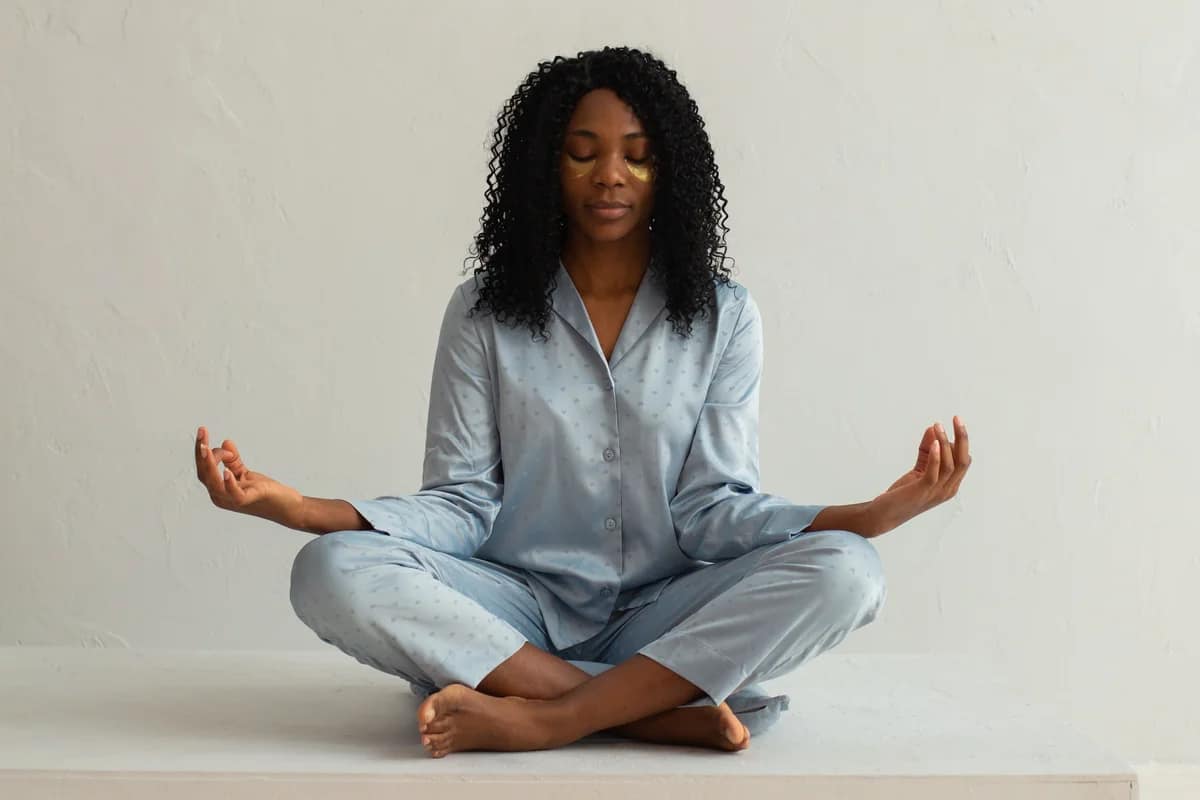
Breath awareness meditation can begin with something very ordinary: noticing the breath that is already happening. You do not need to make it deeper, slower or more impressive. You simply choose a comfortable place, notice a sensation of breathing, and return when your attention moves elsewhere.
If you have been waiting for a quiet mind before trying meditation, this is a gentler starting point. Thoughts can remain part of the experience. There is no particular feeling you have to produce, and a short practice does not need to become a test of concentration.
Observe the breath rather than control it
For this practice, let breathing find its own pace. Notice where it is easiest to feel: perhaps air near the nostrils, the movement of clothing at the ribs, or a small rise and fall in the belly. Pick one place lightly. There is no need to scan for every detail.
Breathing exercises sometimes ask you to count, hold or deliberately lengthen a breath. Those are different activities. Here, you can leave counting and breath holds aside. If you catch yourself managing every inhale, soften the effort and let your attention widen to the room for a moment.
You might notice warmth, coolness, movement or almost nothing at all. Any of these can be your experience today. Try the simple question, What can I notice without changing it?
Choose a position you can comfortably sustain
A chair is a perfectly good place to meditate. Let your feet rest on the floor or a support, with your hands wherever they feel easy. Use the chair back or a cushion if that helps. You can also sit on a bed or floor with enough support beneath you; crossed legs are optional.
A supported reclining position is another option, especially when sitting is uncomfortable. Choose what suits your body, and adjust when you need to. The photograph here illustrates one possible seated position, rather than a posture you need to copy.
The NHS beginner meditation guide also includes ordinary seats such as a chair or bed. Its guidance recognises wandering attention as a natural part of practice, which can take some pressure off a first attempt.
A short breath awareness meditation to try
Set aside around two minutes, or less if that feels more manageable. You can use a quiet timer, but there is no need to watch the clock or complete a fixed number of breaths.
- Arrive where you are. Notice the contact beneath your feet or body. Let your eyes remain open with a soft gaze, or close them if that feels comfortable.
- Find one simple sensation. Notice an ordinary inhale and exhale wherever breathing is easiest to feel. Allow the next breath to happen in its own way.
- Notice when attention moves. A thought, sound or plan may draw you away. You can quietly acknowledge “thinking” and return to one sensation of breathing. No reprimand is needed.
- Finish gradually. Notice the room, move your hands or feet, and look around before continuing your day. Decide whether this was enough for now.
There is no score at the end. You may feel settled, distracted, sleepy or much as you did before. A useful reflection is simply: Was this comfortable enough to try again?
When the mind keeps wandering
You may remember a message halfway through a breath, then find yourself planning dinner. Noticing that shift is already a moment of awareness. Returning does not erase the thought; it gives your attention somewhere simple to rest again.
If you spend most of the practice distracted, you have not failed. Next time, try a shorter session or a different time of day. You can pair a brief pause with an existing habit, such as sitting down before your first cup of tea. Our 10-minute morning wellness routine offers a practical place to fit a small pause into a busy day.
When a task or to-do list keeps interrupting, our meditation guide for a distracted mind offers a way to pause, note what needs remembering and return without turning the practice into a scorecard.
If focusing on breathing feels uncomfortable
The breath is an optional anchor. If attending to it feels unsettling, brings up distress, or makes you feel you must control your breathing, stop the exercise. Open your eyes, look around and notice the support beneath your body. You can end the session altogether.
If you want another focus, try listening to ordinary sounds without searching for a special one. Meditation includes different approaches and anchors; the NCCIH overview of meditation and mindfulness describes this variety and notes that meditation is not free of possible unwanted experiences. It should not replace needed healthcare. Seek appropriate support if practice repeatedly causes distress.
Keep your next step small
You do not need a longer session tomorrow. Repeat a brief, comfortable practice if it suits you, or choose another way to pause. The aim is to make room for noticing, with enough flexibility to listen to your own experience.
For more practical prompts to support a meditation habit at home, explore our Harmony Within meditation guide. Begin with one ordinary moment, and let that be enough.
If you would like a different focus for attention, try our gentle body scan meditation for beginners, with a short outline and options to change focus.